Cheng An Beijing Limited Liability Company
+86-010-56130888
 LanguageLanguage
Huayue:Your Leading Bearings for German FAG Supplier
Our company is an enterprise specializing in bearing exports. After years of development, our sales areas cover the world and have achieved a series of impressive performance and achievements. We will continue to uphold the business philosophy of "integrity, cooperation, and win-win", continuously improve product quality and service levels, and create greater value and achievements for our customers.
Global Shipping
Our bearing products are exported to more than 50 countries and regions in Europe, America, Asia, Africa, etc.
Quality Control
Our products have undergone strict quality testing and certification, comply with international standards and customer needs, and can create greater value and profits for customers.
24H Online Service
Our company has rapid response capabilities and provides 7×24-hour full response service.


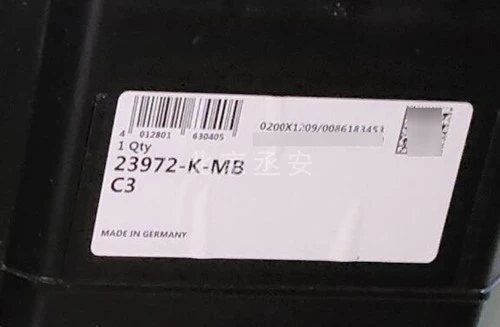
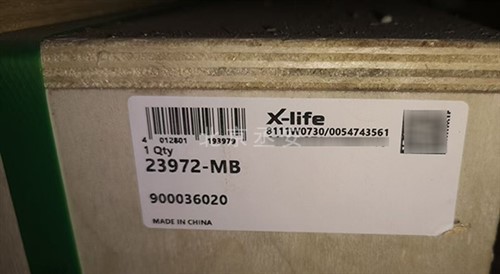


High-quality materials and manufacturing technology
One of the main reasons to choose Bearings for German FAG is the use of high-quality materials in production. These bearings are constructed from high-quality materials, such as high-grade steel and advanced synthetic materials, ensuring long-lasting performance and minimal maintenance requirements. Additionally, FAG uses state-of-the-art manufacturing processes and technologies to ensure the accuracy and consistency of its products.
Innovative design and engineering
Bearings for German FAG are engineered to provide optimal performance and efficiency. Its innovative design reduces friction, heat generation and energy consumption, resulting in improved performance and longer service life. In addition, FAG continuously invests in research and development to introduce new designs and technologies to meet the changing needs of various industries.
Broad product range
Bearings for German FAG offers a variety of bearing types and sizes to meet the unique requirements of different industries and applications. The broad product range enables engineers and professionals to find the perfect bearing solution for their specific needs. From deep groove ball bearings to spherical roller bearings, FAG has the right product for every application.
Global availability and support
Bearings for German FAG products are sold worldwide through an extensive network of authorized dealers and service centers. This global supply ensures that customers can quickly and easily obtain the FAG bearings they need, no matter where they are. In addition, FAG provides excellent customer support and technical assistance, ensuring customers receive the best service and advice.
Wide range of applications
Bearings for German FAG are used in a variety of industries and applications, including automotive, industrial machinery, aerospace, renewable energy, and rail and transportation. This versatility makes FAG a reliable choice for professionals seeking high-quality bearing solutions for their specific applications.

1.Has high load capacity. They use high-quality materials and advanced manufacturing processes and can withstand large radial and axial loads, making them suitable for various high-load working environments.
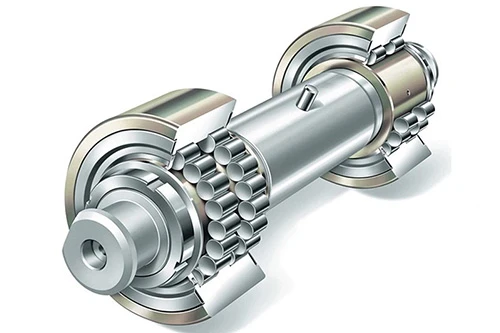
2. Has high speed capability. They have an optimized internal structure and lubrication system, allowing them to maintain good operating stability during high-speed rotation and are suitable for high-speed equipment.
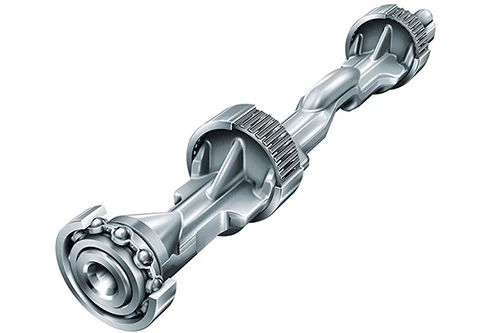
3. Low friction and low energy consumption. They use high-quality lubricants and seals to reduce friction losses and energy consumption, increasing equipment efficiency and service life.
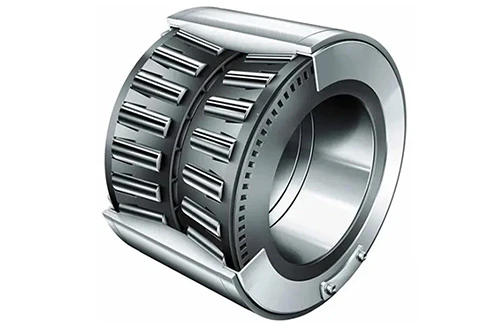
4. High precision and reliability. They use precision manufacturing processes and strict quality control to ensure dimensional accuracy and operational reliability, reducing breakdowns and maintenance frequency.

5. Long service life. They use high-quality materials and advanced heat treatment processes to enhance hardness and wear resistance, extend service life, and reduce replacement frequency and maintenance costs.

6. Has good adaptability and versatility. They can adapt to various working environments and conditions and are widely used in mechanical equipment, automobiles, aerospace and other fields. It is a bearing product with stable and reliable performance.
Bearings for German The production of FAG is vital to many industries. Let’s explore some key areas that rely heavily on bearings:
Automotive Industry: Bearings for German FAG plays a vital role in vehicles, from engines and transmissions to wheels and suspension systems. They enable smooth operation, reduce energy losses and increase overall efficiency.
Aerospace industry: Aircraft require precision components that can withstand extreme temperatures, high speeds and heavy loads. Bearings for German FAG used in jet engines and landing gear systems ensure aviation safety and reliability.
Manufacturing: Bearings for German FAG is widely used in various manufacturing equipment, such as lathes, milling machines, robots, etc. They contribute to the smooth operation of these machines, increasing productivity and efficiency.
Energy Industry: Bearings for German FAG is vital in power generation equipment such as wind turbines, hydroelectric power plants, and gas turbines. They support the axis of rotation and convert the energy of motion into electrical energy.
Construction industry: Construction machinery such as cranes, excavators, concrete mixers, etc. rely on Bearings for German FAG to bear heavy loads and achieve smooth movement, improving the overall efficiency and safety of construction projects.
1. Centripetal deep groove ball bearings
These are the most common type of Bearings for German FAG, having a single row of cylinders held in place by two rings.
They can support radial and axial loads and have high-speed capabilities. They are made from high-grade steel for superior performance and minimal maintenance.
2. Angular contact ball bearings
These are also called one-way bearings because they can only allow rotational movement in one direction.
Angular contact ball bearings can only carry thrust loads in one direction, so an additional bearing is required to carry the opposite direction.
They are suitable for high speed and shallow noise operation.
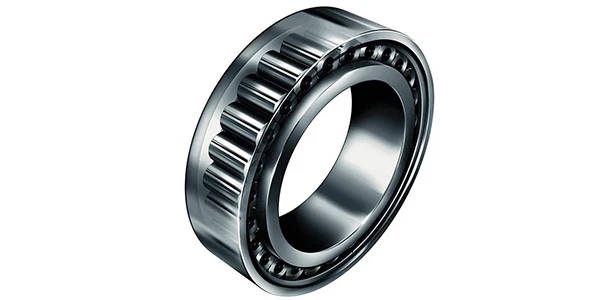
3. Cylindrical roller bearings
This type of Bearings for German FAG has a single row of cylindrical rollers arranged at right angles to each other in an orbital cage.
Due to its rugged design, it is capable of handling large radial loads while providing low-friction operation at high speeds.
4. Spherical roller bearings
FAG spherical roller bearings feature a spherical outer ring, which is designed to deflect angular misalignment between the inner and outer rings during rotation, thus extending lubrication life and heavy load capabilities up to 3 million dN (dynamic load).
5.Needle roller bearings
This type of Bearings for German FAG consists of cylindrical rollers guided by small tracks in the outer ring and surrounding cage structure. Due to its compact size, it does not require external lubrication or replacement parts (such as ball cages or separators) i.e. Can run smoothly.
Needle roller bearings require little space but provide high load-carrying capacity for rotational and vibrational movements in mechanical applications such as pumps, compressors, motors, etc.

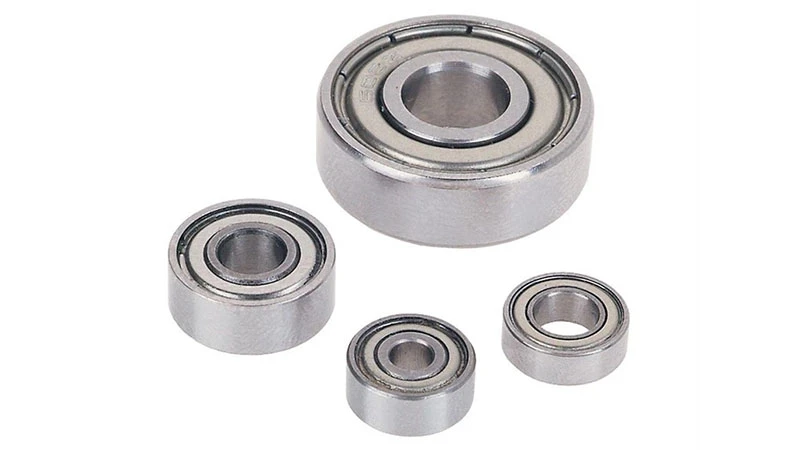
6.Tapered roller bearings
These are a special type of Bearings for German FAG that have tapered raceways on both the inner ring (cone) and outer ring (outer ring), allowing them to "roll" against each other, reducing friction compared to standard cylindrical type bearings.
It relies on sliding contact between internal components instead of rolling motion, thereby reducing friction losses and thus improving energy efficiency.
7. Thrust Ball Bearings
Thrust ball bearings consist of a shaft ring and two seat rings with grooves cut along an axis perpendicular to the shaft axis.
Steel balls mounted in grooves within the bearing seat washers, together with a retaining assembly, hold everything together properly under heavy loads, such as propulsion systems on ships or aircraft that may experience extremely high radial thrust
8.Bearing With Seat
Housing units consist of pre-assembled housings with self-aligning or non-self-aligning split spherical roller or split cylindrical roller bearing inserts, due to the wide range of sizes, from 1/2 inch in diameter to 4 inch.
9. Insert Ball Bearing Unit
Spherical insert ball bearing units consist of two pre-assembled components; the insert bearing is fixed within the cast iron housing unit and has a grease nipple on top for easy maintenance.
10. Split Spherical Roller Bearing Unit
Split spherical roller bearing units have excellent service life because they feature two rows of symmetrical barrel rollers, allowing them to accommodate misalignment between mating parts while providing higher durability than traditional metal-on-metal designs. operating accuracy and run more efficiently and quickly.
Choosing the correct Bearings for German FAG is a critical decision that directly affects the performance and service life of your machinery. The following step-by-step guide can help you make an informed decision:
Determine your application needs
Start by understanding the specific requirements of your application. Consider factors such as load capacity, speed requirements and environmental conditions. This initial assessment will guide you in selecting the right bearing for your machinery.
Determine bearing type
FAG offers a wide range of bearing types, including ball bearings, roller bearings and specialty bearings. Evaluate the characteristics of each type and select the type that meets your application needs.
Consider load and speed ratings
Consider the expected loads and operating speeds your machine will experience. FAG provides load and speed ratings for each bearing to help you select a bearing that meets the specific needs of your application without compromising performance.
Understand installation and assembly requirements
Different applications may have different installation and assembly specifications. Make sure the selected FAG bearing meets these requirements seamlessly. Proper installation is key to maximizing bearing performance and service life.
Temperature and environmental factors
Assess your machine's operating environment. FAG bearings are designed to operate in a wide range of temperatures and conditions. Choose bearings that can withstand the environmental challenges your machinery may face to ensure longevity and reliability.
Sealing and lubrication
Consider the level of protection your machine requires. Bearings for German FAG are available in different sealing options to prevent contamination. Additionally, choose the right lubrication to optimize performance and reduce maintenance needs.
Consult an expert
Still not sure which bearing option is best for your application? Our team of experts is here to help. Please feel free to seek personalized guidance and advice based on your specific requirements.
Cold Plastic Deformation Layer:
During the grinding process, each moment of the abrasive grain is equivalent to a cutting edge. However, in many cases, the rake angle of the cutting edge is negative. In addition to the cutting effect, the abrasive grains also subject the workpiece surface to extrusion (ploughing effect), leaving an obvious plastic deformation layer on the workpiece surface. The deformation degree of this deformation layer will increase with the passivation degree of the grinding wheel and the increase of grinding feed.

Thermoplastic Deformation Layer:
The instantaneous temperature formed by the grinding heat on the working surface causes the elastic limit of the workpiece surface layer at a certain depth to drop sharply, even to the point where the elasticity disappears. At this time, the free stretching caused by the grinding force, especially the compression force and friction force, is limited by the base metal, and the surface is compressed (multiple plowing), causing plastic deformation of the surface layer. When the grinding process remains unchanged, as the surface temperature of the workpiece increases, high-temperature plastic deformation increases.
Work Hardened Layer:
Sometimes the increase in surface hardness caused by processing deformation can be found using microhardness and metallographic methods.
In addition, in addition to grinding, the surface decarburization layer caused by casting and heat treatment heating, if not completely removed during subsequent processing, will remain on the surface of the workpiece and cause surface softening and deterioration, leading to premature bearing failure.
Our pre-sales service team will provide necessary product information and technical support to help customers understand our products and services. Customers can contact us through a variety of channels, including phone, email, online chat and social media. We will try our best to answer all questions raised by customers and send detailed quotations and samples to customers within a short time.
After the order is confirmed, we will arrange professional sales personnel to follow the order, responsible for communication and coordination with customers, ensuring the smooth progress of the production plan, and providing timely feedback on the production progress to customers. We ensure that every aspect of the production process is inspected by professional quality control personnel. If customers have special requirements, we will try our best to meet them.
Our after-sales service team will follow up on sample status and order delivery, and communicate feedback with customers regularly to ensure customer experience. During the warranty period, if there is a problem with the product, we will deal with it promptly and provide customers with the best technical support. If customers have any needs or problems, we will communicate and resolve them as soon as possible.
What are the most common types of Bearings for German FAG?
Deep groove ball bearing The most commonly used bearings are deep groove ball bearings. Due to their simple design, they are easy to maintain and are not too sensitive to operating conditions, so they can be used in a variety of different applications. In addition to radial forces, they also absorb axial forces in both directions.
Where are Bearings for German FAG produced?
Bearings for German FAG are used in automobiles, railway vehicles, aircraft and industrial machinery. The company's bearing division has production facilities in Western Europe, Asia, Brazil, the United States and Canada.
What are the basic Bearings for German FAG types?
Ball and roller bearings Two basic types of rolling elements distinguish the two basic types of rolling bearings: ball → ball bearing.
What are the most commonly used Bearings for German FAG materials?
Most ball bearings are made from a type of steel called high carbon chromium steel, often referred to as chromium steel. This is used for cost and durability reasons. Bearings are also made from other materials, such as stainless steel, ceramics and plastics.
Which type of Bearings for German FAG is the best?
Angular contact ball bearings also generate very little heat under combined loads. Therefore, both types of bearings are best suited for high-speed applications. Single row roller contact bearings are also suitable for high speeds.
What are common bearing materials?
Roller, ball and tapered roller bearings are typically made from chromium SAE 52100 bearing steel. The material has excellent wear resistance, with a Rockwell hardness of approximately 64 HRC. Chromium steel bearings can operate at temperatures up to 120°C and, with heat treatment, even up to 220°C.
Which bearings have longer service life?
Based on service life, ceramic ball bearings may last ten times longer than steel bearings in the same motor. Compared with steel bearings, ceramic balls are less prone to expansion and vibration.
Are there different types of Bearings for German FAG?
There are many types of Bearings for German FAG, each with a different purpose. These include ball bearings, roller bearings, ball thrust bearings, roller thrust bearings and tapered roller thrust bearings.
What makes Bearings for German FAG faster?
The easiest way to make Bearings for German FAG spin easier is to remove all lubricant and allow it to "dry".
Why does Bearings for German FAG malfunction?
While it may seem like common sense, standard wear is one of the leading causes of bearing failure. Eventually, all bearings will fail due to wear, however, excessive load, vibration or external force may cause Bearings for German FAG to wear prematurely. Most of this excessive force is caused by improper installation.
At what temperature will Bearings for German FAG fail?
Under equipment trip/shutdown conditions, bearing temperatures may exceed 300 degrees Fahrenheit. Bearings at this temperature are likely in the final stages of failure. Depending on the design of the equipment, failure can occur quickly and be catastrophic. Response time may be hours, not days.
Why do Bearings for German FAG overheat?
Overheating problems are related to fluid friction, which is the result of fluid agitation. This is a secondary effect of overfilling the cavity during relubrication. Installing a pressure relief vent may help in this situation, but this will only address the symptom and not the cause.
Why do Bearings for German FAG rust?
Contact with corrosive elements Metal products corrode when they react with oxygen and water. Electric current, chemicals, and even dirt and bacteria can also cause corrosion. As with most metal bearings, their continued contact with the elements can lead to rust and corrosion over time.
How to check Bearings for German FAG temperature?
Using a portable temperature measurement tool, such as a thermal imaging gun, will help you accurately monitor Bearings for German FAG temperatures. When a bearing fails, its temperature will continue to rise. Temperature trends over time will help identify bearings in the early stages of failure.
What is the normal temperature of bearings?
There is always some fluctuation in the operating temperature of the bearings within the motor. The individual operating temperature depends on factors such as the motor's application and ambient temperature. However, as a guide, 170°F or 80°C should be considered normal temperatures.
How to read the bearing code?
The first number indicates the width or height series (size B, T or H). The second number identifies the diameter series (size D). The last two digits of the basic model number indicate the bearing bore size code. Multiply the size code by 5 to get the hole diameter (d) in millimeters.
Bearings for German FAG: Is the bigger the better?
In terms of performance, generally speaking, the bigger the balls in Bearings for German FAG, the better, as increasing diameter has an exponential factor for increasing contact. More contact means more even force distribution and results in better rolling performance and durability.
What are the common faults of Bearings for German FAG?
The most common types of Bearings for German FAG failures are overheating, contamination, insufficient lubrication (including excessive and incorrect lubrication), misalignment, corrosion, indentation, galvanic corrosion, improper installation and poor fit.
What types of Bearings for German FAG materials are there?
Carbon steel bearings. Carbon steel, also known as "commercial grade," is not stainless steel but contains up to 2.1% carbon by weight. Chrome steel bearings. Stainless steel bearings. Ceramic bearings. Polymer plastic bearings. Hybrid bearings.
How to choose Bearings for German FAG type?
Understand the types and magnitudes of bearing loads that your application will impose on the bearings. Ball bearings are usually best suited for small to medium loads. Heavy-duty applications generally work best with roller bearings. Determine the RPM for your application.
As one of the leading bearings for german fag suppliers in China, we warmly welcome you to buy or wholesale cheap bearings for german fag from our factory. All our products are with high quality and low price. Contact us for more details.
axial thrust ball bearing, Full Complement Roller Bearings for FAG, Ball Screw Bearings for FAG(0/10)


