Cheng An Beijing Limited Liability Company
+86-010-56130888
 LanguageLanguage
Huayue:Your Leading Bearings for Japan KOYO Supplier
Our company is an enterprise specializing in bearing exports. After years of development, our sales areas cover the world and have achieved a series of impressive performance and achievements. We will continue to uphold the business philosophy of "integrity, cooperation, and win-win", continuously improve product quality and service levels, and create greater value and achievements for our customers.
Global Shipping
Our bearing products are exported to more than 50 countries and regions in Europe, America, Asia, Africa, etc.
Quality Control
Our products have undergone strict quality testing and certification, comply with international standards and customer needs, and can create greater value and profits for customers.
24H Online Service
Our company has rapid response capabilities and provides 7×24-hour full response service.


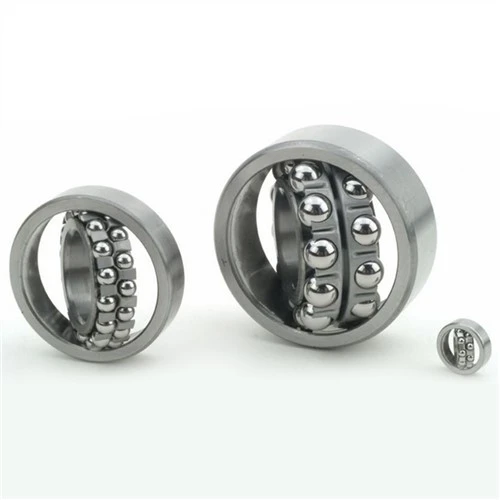
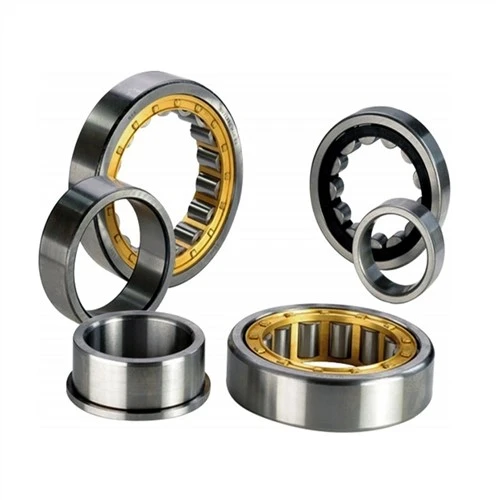


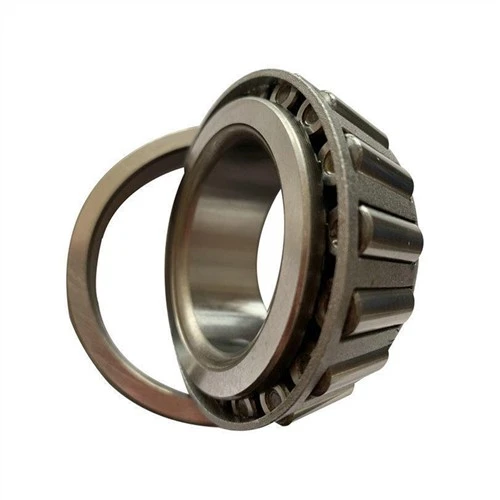


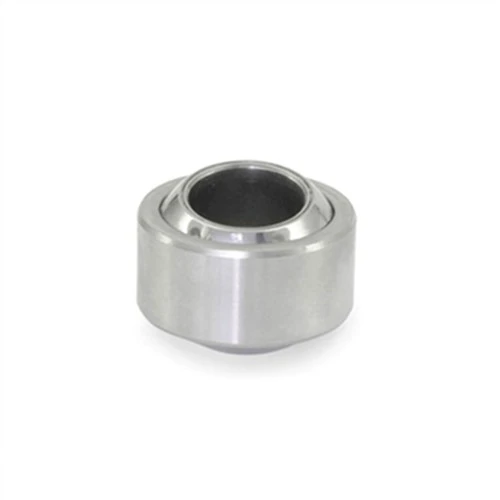
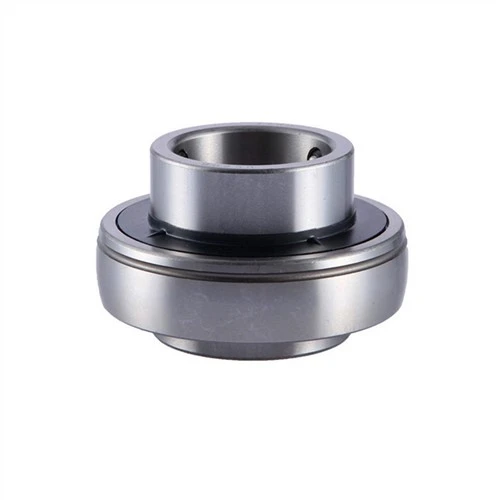
1.Deep Groove Ball Bearing for KOYO
Deep groove ball bearing units come in a wide range of sizes and are capable of supporting both radial loads and bidirectional axial pressure, making them the most popular rolling bearing type.
2.Angular Contact Ball Bearings for KOYO
Angular contact ball bearings are suitable for applications requiring high precision and high rotational speeds, and are capable of carrying combined radial and axial loads due to the contact angle of the rolling elements.
3.Thrust Ball Bearings for KOYO
Thrust ball bearings are available in one-way and two-way varieties; the former can only bear axial load in one direction, while the latter can. When the inner ring, balls and cage are slightly tilted relative to the outer ring, rotation is still maintained because the center of curvature of the outer ring raceway characteristic of spherical roller bearings or convex roller bearings coincides with the center of the bearing. Therefore, its self-aligning capability is suitable for applications including shaft deflection, bearing housing misalignment, etc. By using adapters, it is easier to install tapered roller bearings on shafts.


4.Spherical Roller Bearings for KOYO
Spherical roller bearings are suitable for low to medium speed applications involving large loads and shocks due to their high load ratings and self-aligning properties. Convex barrel rollers are mounted diagonally in the bearing. Spherical roller bearings are self-aligning bearings that can withstand a small amount of angular tilt because the raceways of their housing raceway washers are spherical.
5. Tapered Roller Apex for KOYO
Due to the design of this bearing, the apex of the tapered roller surface on the tapered outer ring raceway coincides with a point on the bearing centerline. Suitable for heavy duty and shock load applications.
6.Cylindrical Roller Bearings for KOYO
Because the truncated cone rollers of cylindrical roller bearings are in line contact with the raceway, they have a high radial load capacity and can withstand heavy loads and impact loads. The inner and outer rings are separable, making installation and removal simple. Due to their low cross-sectional height, needle roller bearings help reduce the overall weight and size of the machine. As such, they are used in a variety of applications, including those involving automobiles, motorcycles, motors, machine tools, aerospace equipment, office equipment, and other industrial equipment.
When selecting bearings for your application, consider the following factors:
Required speed
One way to select the correct bearing type is to determine the rotational speed for your application. For example, roller bearings are ideal for low-speed tasks, while ball bearings are ideal for high-speed applications.
Lubrication needs
The type of lubrication suitable for your application depends on its speed. Lower speed applications benefit from an oil bath, whereas higher speeds may require grease or even oil mist if the n*dm value exceeds the maximum speed allowed by the grease.
Bearing rigidity and runout
It is also important to evaluate the application's tolerance for bounce deviations. For example, if your application only allows for small fluctuations, ball bearings are the best choice.
Bearing required capacity and load
Roller bearings can handle heavy loads, while ball bearings are better suited to handle small or average loads. Considering the load capacity required for your application will help you choose between these types.
Bearings find applications in all types of industries, although each type of bearing has its ideal use. Common industrial applications of bearings include:

1. Aggregates, Concrete and Mining
These areas require bearings such as gearbox and conveyor bearings that have excellent load capacity and withstand harsh conditions. They can be used in equipment such as vibrating screens, tunnel boring machines and bucket wheels.
2. Motor maintenance
Bearing types such as deep groove ball bearings or angular contact ball bearings and cylindrical roller bearings aid in motor maintenance. They are often found in electric motors in the automotive, aerospace, industrial equipment, HVAC, and appliance industries. Ceramic hybrid bearings and galvanic grounding devices are increasingly used to extend bearing life.
3. Mechanical tools
Machine tool bearings are widely used in machining centers, high-speed spindles, automatic screw machines, water jet equipment and other equipment. These tools rely on bearings such as angular contact bearings, ceramic hybrid spindle bearings, high-precision cylindrical roller bearings and ball screw support bearings.
4. Marine spare parts
Options such as process split and split spherical bearings support optimal functionality of marine components such as stern shafts, rope guards, sonar equipment and hydraulic or electronic thrust metering machinery.
5. Material handling
Mast guides, cam followers, double row and plate chain bearings facilitate material handling applications. They are commonly found in forklifts, conveyor systems and heavy-duty cranes.
6. Metal processing
Groove and roller bearing varieties assist in metal processing, support wire forming and metal recycling applications.
7. Packaging/Food Processing
For example, filling equipment in the food and beverage processing industry uses options such as slewing rings, crossed rollers and four-point contact bearings. Stainless steel bearings and solid lubrication extend service life.
8. Plastic processing and molding
The industry uses roller bearings, linear bearings and thrust ball bearings, etc., to facilitate the movement of machine parts in ejector shafts, extrusion gearboxes, and injection, mold clamping and pressure cylinders.


9.Generate electricity
Turbines, generators, compressors, pumps, drives, and more all use bearings to help generate electricity. The power generation market typically uses roller bearings, ball bearings, vane bearings, radial bearings, pillow block bearings and yaw bearing types.
10. Pulp, paper processing and printing
A variety of bearings are used in machining and printing processes, including ball, cylindrical and spherical roller bearings, linear bearings, one-way clutch bearings and free-running bearings. They contribute to the smooth operation of drums, slitting machines, rewinders and other equipment.
11. Pumps, Compressors and Oilfields
The petroleum industry requires a wide variety of ball and roller bearings with high load capacities to operate pumps, compressors and drives.
12. Leisure
Ball, roller and ceramic bearings are used in a variety of recreational equipment such as go-karts, ski slopes, inline skates, bowling pinsetters and fishing reels.
13. Robotics and Automation
Automated machinery relies on ultra-precision linear motion bearings to ensure precise and repeatable motion of robot arms, conveyor systems, AGVs and more.
14.Transportation
The transportation industry uses bearings in automotive, railcar and aircraft components such as chassis, drive systems, brakes and axles. The main choices are ball bearings and cylindrical or tapered roller bearings.
15.Wastewater treatment
Ceramic bearings are a type of bearing used in wastewater treatment. Bearings in this area are used in valves, drives, pumps, flow meters and hydraulic machinery.
16.Wood products
In wood production applications, you might use bearings in raw wood processing operations or in finished cabinets. Spherical roller bearings, radial ball bearings and P53 bearings are good choices for this market.

Our pre-sales service team will provide necessary product information and technical support to help customers understand our products and services. Customers can contact us through a variety of channels, including phone, email, online chat and social media. We will try our best to answer all questions raised by customers and send detailed quotations and samples to customers within a short time.
After the order is confirmed, we will arrange professional sales personnel to follow the order, responsible for communication and coordination with customers, ensuring the smooth progress of the production plan, and providing timely feedback on the production progress to customers. We ensure that every aspect of the production process is inspected by professional quality control personnel. If customers have special requirements, we will try our best to meet them.
Our after-sales service team will follow up on sample status and order delivery, and communicate feedback with customers regularly to ensure customer experience. During the warranty period, if there is a problem with the product, we will deal with it promptly and provide customers with the best technical support. If customers have any needs or problems, we will communicate and resolve them as soon as possible.
Who uses Bearings for Japan KOYO?
Koyo tapered roller bearings are mainly used in the following areas: Automobiles: front wheels, rear wheels, gearboxes, differential pinion shafts; others: machine tool spindles, engineering machinery, large agricultural machinery, railway vehicle reduction devices, rolling mill rollers and reduction device
Is Bearings for Japan KOYO the best?
Bearings for Japan KOYO has earned a reputation for reliability, excellent runout accuracy and dimensional accuracy. They come in different shapes and sizes and are suitable for many different applications. Additionally, Bearings for Japan KOYO are corrosion-resistant and available in a variety of coatings for enhanced protection.
Is Bearings for Japan KOYO good?
There are no problems with Bearings for Japan KOYO. They are used in many heavy equipment applications. and works fine. Many bearing failures are not bearing failures, most are caused by improper specification, installation, or dirt and water contamination.
How do I know if my Bearings for Japan KOYO is authentic?
Scan the QR code to verify the authenticity of KOYO brand bearings on the app. ① Valid code (green) This is the valid code of JTEKT (Koyo). ② Overscanning and suspicious code (yellow) The code exists in the JTEKT database, but the number of scans exceeds the allowed limit. ③Counterfeit or fake bearing code (red)
What are the applications of bearings?
Bearings are widely used in vehicles such as wheels, gearboxes, engines, suspension systems and steering systems. Industrial Machinery: Bearings play a vital role in the operation of various industrial machinery, including pumps, motors, compressors, conveyors, blowers and gearboxes.
What is a high-quality bearing?
Premium bearings are made from premium materials and the latest technology that exceeds normal standards. These bearings are known to have very tight tolerances on all dimensions, ensuring smooth and efficient operation
How to check bearing quality?
(a) There are cracks in the inner or outer ring, rolling elements or cage. (b) There is spalling on the raceways or rolling elements. (c) There are obvious stains on the raceway surface, ribs or rolling elements. (d) The cage is obviously worn or the rivets are loose.
How long is the service life of bearings?
Approximately 85,000 to 100,000 miles The average wheel bearing life is 136,000 to 160,000 kilometers (approximately 85,000 to 100,000 miles).
Will the bearings break?
If water, mud, road salt or sand gets past the seal and contacts the bearing, it can contaminate the grease, causing bearing wear and ultimately premature failure. Additionally, neglecting worn wheel bearings could damage your vehicle's constant velocity joints (CV joints) or automatic transmission.
Which bearings are used for heavy loads?
Hydrostatic bearing Hydrostatic bearings refer to bearings that can withstand heavy loads without relative motion between the journal and the bearing, and are therefore suitable for bearing heavy loads. This is achieved by applying an external pressurized lubricant between the components.
What is a good bearing material?
First, the most common bearing material is steel, which has a wide range of applications due to its ability to withstand high static and radial loads. Steel bearings tend to be made from SAE 52100 steel, known as low-alloy high-carbon steel.
How to calculate bearing specifications?
Step 1: Prepare your device. Zero or calibrate a digital caliper or micrometer according to the manufacturer's instructions. Step 2: Measure Bore Diameter - Inside Diameter (ID) Place the ball bearing on a flat, clean surface. Step 3: Measure the outside diameter (OD) Step 4: Measure width (thickness)
What are the main causes of bearing failure?
While it may seem like common sense, standard wear is one of the leading causes of bearing failure. Eventually, all bearings will fail due to wear, but excessive loads, vibrations or external forces can cause premature bearing wear. Most of this excessive force is caused by improper installation.
How often should I replace bearings?
Approximately every 85,000-100,000 miles Driving with old or worn wheel bearings is very dangerous as it can cause the wheels to stop turning unexpectedly. On average, you only need to replace your wheel bearings approximately every 85,000-100,000 miles
Will bearings rust?
They can rust quickly if exposed to many strong chemicals, acids, alkalis, and salt water.
How to calculate bearing load?
In order to calculate bearing loads, the forces acting on the shaft supported by the bearing must be determined. The loads acting on the shaft and its associated parts include the weight of the rotating parts, the loads generated when the machine performs work, and the loads generated when power is transmitted.
Which type of bearing is best suited for vertical loads?
In fact, for vertical shafts (heavier axial loads), the best bearings are tapered roller bearings. This is best if the load is heavy. But for light loads in smaller machines where axial loads are not severe, you can even use deep grove ball bearings. They can withstand lighter axial loads.
Do I need to lubricate new bearings?
Bearing lubrication is essential to maintain the performance and service life of rolling bearings. Lubrication helps separate moving parts, such as rollers and raceways or balls, from each other to prevent wear and friction.
Can I clean the bearings?
Your best bet is to use methylated spirits or soak the bearings in some solvent or alcohol. If you can find a spray degreaser, it will do a great job of getting all the dirt off the bearings. Lemon juice works great too!
As one of the leading bearings for japan koyo suppliers in China, we warmly welcome you to buy or wholesale cheap bearings for japan koyo from our factory. All our products are with high quality and low price. Contact us for more details.
Thrust roller bearing for Japan KOYO, Deep groove ball bearing for Japan, Tapered Roller Bearings for KOYO(0/10)


