Cheng An Beijing Limited Liability Company
+86-010-56130888
 LanguageLanguage
Huayue:Your Leading Bearings for Japanese NTN Supplier
Our company is an enterprise specializing in bearing exports. After years of development, our sales areas cover the world and have achieved a series of impressive performance and achievements. We will continue to uphold the business philosophy of "integrity, cooperation, and win-win", continuously improve product quality and service levels, and create greater value and achievements for our customers.
Global Shipping
Our bearing products are exported to more than 50 countries and regions in Europe, America, Asia, Africa, etc.
Quality Control
Our products have undergone strict quality testing and certification, comply with international standards and customer needs, and can create greater value and profits for customers.
24H Online Service
Our company has rapid response capabilities and provides 7×24-hour full response service.


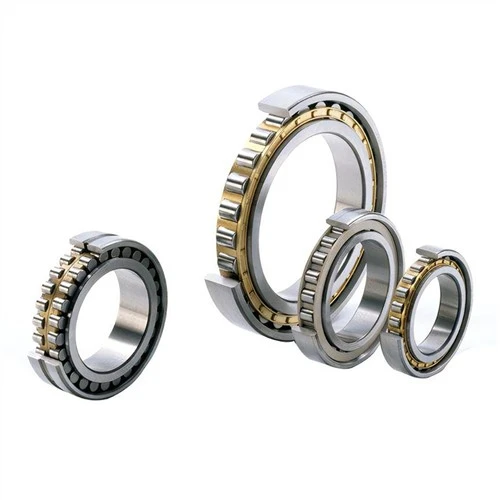


NTN offers a wide range of bearings to meet the different needs of different industries. Some common types of Bearings for Japanese NTN include:
1. Deep Groove Ball Bearings:
These bearings are designed to carry radial and axial loads in both directions. They are commonly used in electric motors, automotive applications and household appliances.
2. Angular Contact Ball Bearings:
These bearings are designed to carry both radial and axial loads. They are most commonly used in machinery that requires high-speed and high-precision performance, such as machine tools and pumps.
3. Tapered roller bearings:
These bearings can carry radial and axial loads in a single direction. They are commonly used in automotive wheels, transmissions, and other heavy-duty applications.
4. Cylindrical roller bearings:
These bearings are designed to carry heavy radial loads at high speeds. They are commonly used in industrial gearboxes, conveyor systems and rolling mills.
5. Spherical roller bearings:
These bearings can bear very heavy radial and axial loads. They are commonly used in applications such as mining, construction equipment and industrial machinery.

Reliable installation
Difficult to loosen round head set screws
To secure the bearing to the shaft, round head set screws are used. Ball set screws feature NTN's unique design, which features a hardened steel ball at the end of the set screw to reliably lock the bearing to the shaft, even when subjected to vibration or shock loading.
Key Benefits of Round Head Set Screws
1) Reduces fretting wear on set screw tips - Hardened steel ball head set screws significantly reduce fretting wear. Other types of materials are softer and therefore subject to wear and tear.
2) Reusable - Hardened steel balls will not deform when tightened, whereas traditional set screw tips will deform after tightening.
Reliable sealing performance
standard unit
Bearings for Japanese NTN have a dual sealing structure, including oil-resistant rubber seals and oil deflector rings.
The double seal structure has more reliable sealing performance than standard seals because the entry path of dust is long, and when the bearing is running, excess grease will be removed between the seal and the oil retaining ring to act as a seal.
Bearing unit with dust cover
NTN offers bearing units with external dust covers. Dust caps and sealing mechanisms made of pressed steel or cast iron provide additional protection for bearing units in heavily contaminated environments. Bearing units with dust shields can withstand the harshest dust and moisture-laden environments found in flour mills, steelmaking, foundries, electroplating and chemical plant applications. These units can also be used on outdoor equipment such as construction and transportation machinery.
The rubber seal in the dust cover has two lips that make contact with the shaft. The grease between the two lips not only enhances the sealing performance, but also lubricates the contact surface between the lips and the shaft.
Triple sealed bearings
Triple sealed bearings feature a bearing seal with three lips. Special seals provide reliable dust and water resistance over standard bearings and provide longer bearing life.


Self-alignment
Self-aligning cap seal
The design of the NTN covered bearing unit allows the sealing lip to follow the shaft even when the shaft is misaligned. Therefore, even if the bearings are automatically aligned with the shaft angle, the covered bearing unit still achieves the rated dust protection performance of the covered seal. However, to ensure that the rated dust protection is not affected by uneven contact between the sealing lip and the shaft, the alignment tolerance should be limited to ±1°.
Because the seals of other manufacturers' products are fixed, dust-proof performance becomes unreliable when the bearing is angularly aligned with the shaft.
Prevent IR cracks
To prevent deformation and cracking of the inner ring due to over-tightening of the set screws, one may think that tightening the set screws tighter will prevent loosening. However, if the set screw is tightened too much, it will cause heart-shaped deformation of the inner ring circumference. At the same time, similar deformation will occur in the inner ring, and the internal clearance will gradually become smaller, eventually leading to bearing failure. Therefore, it is recommended to tighten the set screws with appropriate torque. To prevent the inner ring from cracking due to over-tightening of the set screws, some models are induction annealed.

Atmospheric Relative Humidity
Absolute humidity: weight of water vapor per unit volume of air (g/m3)
Relative humidity: The ratio of the water vapor content in the air to the saturated water vapor content of the air at the same temperature, expressed as a percentage.
Relative humidity determines whether a water film forms on the metal, as well as its thickness and retention time. The higher the relative humidity, the greater the humidity in the air and the faster the metal will corrode. The critical relative humidity for steel is 70%.
Temperature
Generally speaking, when the temperature increases, the reaction rate of chemical reactions increases. Metal interacts with oxygen and moisture in humid air, reaching above the critical temperature. Temperature changes cause condensation on the metal surface, causing corrosion. When the relative humidity is lower than the critical humidity of the metal, the effect of temperature on atmospheric corrosion is small; when the relative humidity reaches the critical humidity of the metal, the effect of temperature is very obvious. As the temperature increases, the reaction speed accelerates.
The Influence Of Oxygen
Atmospheric corrosion of metals cannot occur without oxygen, and in some special cases, the concentration of oxygen on the metal surface is different, which can produce special forms of differences in gas-filled batteries. For example, on an overlapping surface, that is, when a metal surface is in close contact with another surface, there will be no rust at the edges of the contact surface, but cloud-like shadows or rust will appear at the edges. On steel, this rust product is usually gray or black (iron oxide).
Impact Of Air Pollutants
In addition to oxygen and water vapor, the atmosphere also contains a variety of pollutants. Such as carbon dioxide, nitrogen oxides, carbon dioxide and other gases and solid dust. These pollutants will condense on the metal surface together with water mist in the air and dissolve in the water, producing the following results: various non-metal oxides dissolve in water and become acids, thereby destroying the passivation film on the metal surface; various electrolytes Increase the conductivity of the water film; reduce the critical relative humidity of metals. (For example, when the atmosphere contains 0.01% SO2, the critical humidity can be reduced from 70% to 50%, and in a humid atmosphere, one SO2 molecule can turn dozens of iron atoms into oxides).

Main application areas of Bearings for Japanese NTN
1. Automobile industry:
Bearings are used in automobiles to support rotating parts in steering systems, transmission systems, engines and chassis systems.
2. Manufacturing:
Bearings play a role in supporting and reducing friction in manufacturing equipment such as machine tools, motors, tools, and equipment.
3. Energy industry:
Bearings are widely used in nuclear power plants, power stations, oil drilling platforms and other fields.
4. Aerospace industry:
Bearings play an important role in aerospace equipment such as aircraft and rockets, ensuring safe and reliable operation of the equipment.
5. Medical equipment:
Bearings are used to support and reduce friction in medical equipment, such as artificial hearts, artificial joints and other mechanical medical equipment.
Our pre-sales service team will provide necessary product information and technical support to help customers understand our products and services. Customers can contact us through a variety of channels, including phone, email, online chat and social media. We will try our best to answer all questions raised by customers and send detailed quotations and samples to customers within a short time.
After the order is confirmed, we will arrange professional sales personnel to follow the order, responsible for communication and coordination with customers, ensuring the smooth progress of the production plan, and providing timely feedback on the production progress to customers. We ensure that every aspect of the production process is inspected by professional quality control personnel. If customers have special requirements, we will try our best to meet them.
Our after-sales service team will follow up on sample status and order delivery, and communicate feedback with customers regularly to ensure customer experience. During the warranty period, if there is a problem with the product, we will deal with it promptly and provide customers with the best technical support. If customers have any needs or problems, we will communicate and resolve them as soon as possible.
How are Bearings for Japanese NTN classified?
Ball bearings are divided into deep groove type and angular contact type according to the structure of their bearing rings. On the other hand, roller bearings are classified according to the shape of the rollers: cylindrical, needle roller, conical and spherical.
What materials are used in Bearings for Japanese NTN?
NTN uses carburized (case hardened) steel for most of its tapered roller bearings. In terms of case-hardened steel for other NTN bearings, chromium steel and chromium-molybdenum steel are used for small and medium-sized bearings, and nickel-chromium-molybdenum steel is used for large bearings.
Load ratings seem to vary between manufacturers, is there a way to compare similar types of bearings?
There are no real differences in load ratings between manufacturers, just the methods used to calculate the load ratings. Some manufacturers use ABMA standards, some use American Industry standards, and some use equivalent dynamic load calculations. Generally speaking, if the internal design is the same, the load ratings will be equal.
What do the numbers on Bearings for Japanese NTN mean?
Bearings for Japanese NTN number consists of a "basic number" followed by a "supplementary code". The nomenclature of the NTN basic number represents the general information of the bearing, such as basic type, overall dimensions, serial number, bore diameter code and contact angle.
What are the most commonly used bearing materials?
Most ball bearings are made from a type of steel called high carbon chromium steel, often referred to as chromium steel. This is used for cost and durability reasons. Bearings are also made from other materials, such as stainless steel, ceramics and plastics.
What factors should be considered when selecting bearings?
All application data (load, speed, direction, etc.), intended use and environment.
Can I mix and match cups and cones from different suppliers?
Not recommended. While envelope dimensions and tolerances on these dimensions are the same, the internal design may differ. These differences can cause problems, such as premature bearing failure when components are mixed.
Why do we need bearings?
Friction is bound to occur between the rotating shaft and the components that support the rotation. Bearings are used between these two components. Bearings are used to reduce friction and make rotation smoother. This reduces energy consumption.
Which one is better, SKF or NTN?
NTN's tolerances are tighter than SKF's. It has nothing to do with the seal. Bearing life is related to tolerances. bm0p700f wrote: NTN's tolerances are tighter than SKF's.
What is the meaning of bearing number?
The bearing code consists of a basic code and a supplementary code, indicating the specifications of the bearing, including bearing type, overall dimensions, operating accuracy and internal clearance.
What is the working principle of bearings?
It is similar to a wheel in that the bearings enable the device to roll, reducing friction between the bearing surface and its tumbling surface. When friction is reduced, it is easy to move in a rotational or linear manner, which also increases speed and efficiency.
What are the applications of bearings?
They help resolve misalignment issues between the shaft and housing. They are suitable for absorbing high radial loads and moderate axial loads. Usage: Common applications include gearboxes, wind turbines, material handling, pumps, fans and blowers, mining and construction equipment, and more.
How to choose the best bearing?
Determine the RPM for your application. High speeds (RPM) are usually best for ball bearings and lower speeds are usually best for roller bearings. You also want to determine what type of bounce your application allows.
How to identify bearings by size?
Bearings are measured by inside diameter, outside diameter, and width; bearing dimensions typically look like this: ID x OD x W. These measurements are usually in millimeters but can be converted to inches.
Is the bigger the bearing, the better?
In terms of performance, generally speaking, larger balls within a bearing are better, as increasing diameter has an exponential factor in increasing contact. More contact means more even force distribution and results in better rolling performance and durability.
Which bearing is best for motors?
Cylindrical Roller Bearings They can operate efficiently at medium and high speeds and come in a variety of different design configurations. These are used most of the time on belt or gear driven motors
How to check bearings?
For small non-separable ball bearings, hold the bearing horizontally with one hand and rotate the outer ring to confirm that it rotates smoothly. Separable bearings, such as tapered roller bearings, can be inspected by inspecting their rolling elements and outer ring raceways individually.
What makes a bearing faster?
The easiest way to make a bearing spin easier is to remove all lubricant and allow it to "dry".
As one of the leading bearings for japanese ntn suppliers in China, we warmly welcome you to buy or wholesale cheap bearings for japanese ntn from our factory. All our products are with high quality and low price. Contact us for more details.
Eccentric Bearing for NTN, Spherical Plain Bearing for NTN, Cylindrical Roller Bearing for NTN(0/10)


