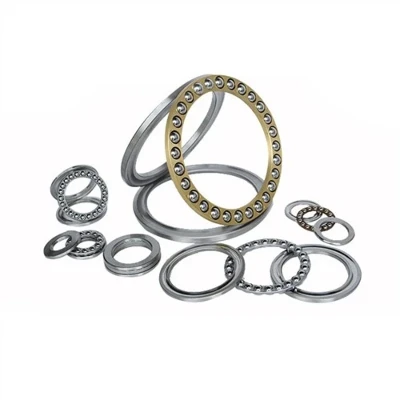
Ball and plain bearings are both types of mechanical bearings. These bearings are used to allow free linear or rotary motion of parts by providing a support surface or guide.
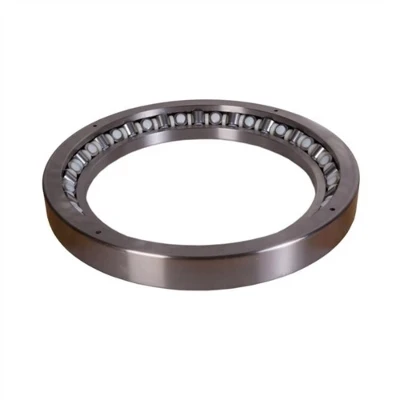
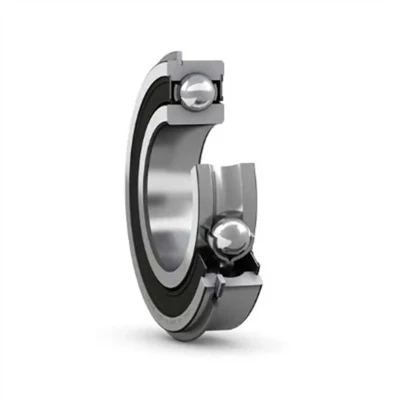
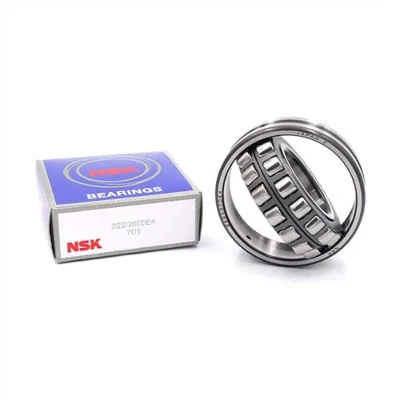
A ball bearing is a type of rolling-element bearing that uses hardened steel balls as rolling elements. These balls are held within a cage or race, which keeps them separated and distributes the load evenly over a large area. The race of ball bearings can be either circular or linear, making them suitable for a wide range of applications. Ball bearings are commonly used in motors, generators, pumps, and other rotating machinery.
A plain bearing, on the other hand, is a type of journal bearing that uses a surface such as metal or plastic to support and guide a rotating shaft. Plain bearings operate on the principle of hydrodynamic lubrication, which means they rely on a thin layer of lubricant to separate the moving parts and reduce friction. Plain bearings are suitable for low-speed, high-load applications such as in engines, gearboxes, and turbines.
There are several advantages and disadvantages of each type of bearing. Ball bearings have low friction, which makes them efficient and long-lasting. They can handle high speeds and radial and axial loads, making them suitable for a wide range of applications. However, ball bearings can also be noisy and have a limited load capacity compared to other bearing designs.
Plain bearings, on the other hand, have a high load capacity and can handle high shock and vibration loads. They are also quieter than ball bearings, as they rely on the oil film to absorb noise and vibration. Plain bearings are less expensive than ball bearings and have a longer service life. However, they require a constant supply of lubrication and are sensitive to dirt and contaminants, which can cause wear and damage to the bearing surface.
When choosing between ball and plain bearings, several factors should be considered. The type of application, load capacity, speed, temperature, and environment are all important factors that must be considered. It is important to choose the right type of bearing for the job to ensure reliable and efficient operation.
Ball and plain bearings have their advantages and disadvantages. Ball bearings are ideal for high-speed and high-load applications, while plain bearings are suitable for low-speed and high-load applications. Choosing the right type of bearing for the application is essential for ensuring reliable and efficient operation of the machinery. With proper maintenance and lubrication, both ball and plain bearings can provide years of trouble-free service.