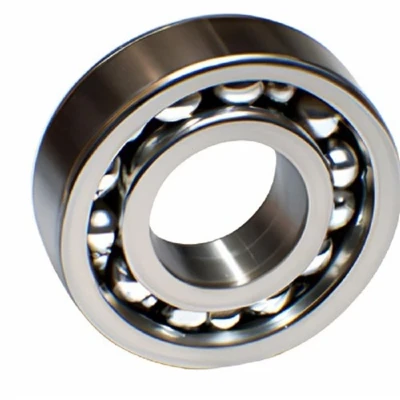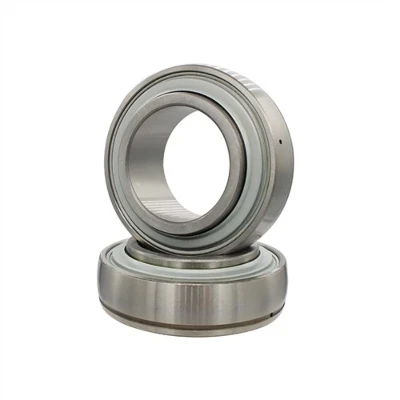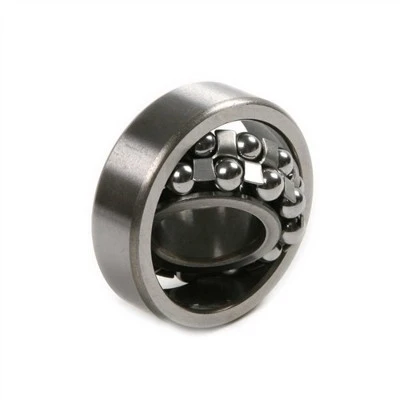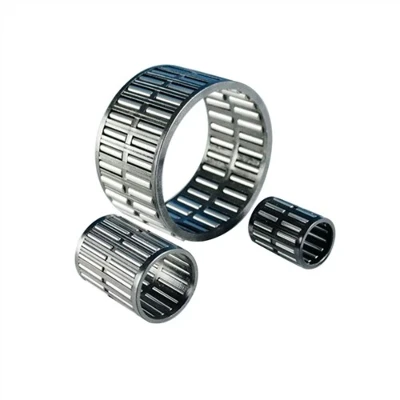



The difference between plain bearings and rolling bearings first appears in the structure, sliding bearings rely on smooth surfaces to support the rotating shaft, so the contact part is a surface; Rolling bearings rely on the rotation of the rolling elements to support the rotating shaft, and the contact part is a point, the more rolling elements, the more contact points nine. Secondly, the movement mode is different, and the movement mode of rolling bearings is rolling; The movement mode of plain bearings is sliding, so the friction situation is completely different.
Plain bearings plain bearings (slidingbearing), bearings that work under sliding friction. Sliding bearings work smoothly, reliable, noise-free sliding bearings under liquid lubrication conditions, the sliding surface is separated by lubricating oil without direct contact, but also can greatly reduce friction loss and surface wear, oil film also has a certain vibration absorption capacity. However, the starting friction resistance is large. The part of the shaft that is supported by the bearing is called the journal, and the part that matches the journal is called the bearing. The friction-reducing material layer cast on the inner surface of the bearing in order to improve the frictional properties of the bearing surface is called the bearing lining. The materials of bearings and bearing linings are collectively referred to as plain bearing materials. Commonly used plain bearing materials are bearing alloys (also known as babbitt alloys or white alloys), wear-resistant cast iron, copper-based and aluminum-based alloys, powder metallurgy materials, plastics, rubber, hardwoods and carbon-graphite, polytetrafluoroethylene (PTFE), modified polyoxymethylene (POM), etc. Plain bearing applications are generally under low-speed heavy-load conditions, or operating parts that are difficult to maintain and fill with lubricating oil.
A precision mechanical element called rolling bearing (rolling bearing) that changes the sliding friction between the running shaft and the shaft seat into rolling friction to reduce friction loss. Rolling bearings are generally composed of an outer ring, an inner ring, a rolling element and a cage. Among them, the role of the inner ring is to cooperate with the shaft and rotate with the shaft, the outer ring function is to cooperate with the bearing seat, play a supporting role, the rolling element is with the help of the cage uniform distribution of the rolling element between the inner ring and the outer ring, its shape and number directly affect the performance and life of the rolling bearing, the cage can make the rolling element evenly distributed, prevent the rolling element from falling off, guide the rolling element to rotate to lubricate.
Rolling bearings rolling bearings are easy to use and maintain, reliable in work, good in starting performance, and have high load carrying capacity at medium speeds. The radial size of rolling bearings with sliding bearings is large, the vibration damping ability is poor, the life is low at high speed, and the sound is large. Radial bearings in rolling bearings (mainly subjected to radial forces) are usually composed of four parts: inner ring, outer ring, rolling element and rolling element cage. The inner ring is tightly sleeved on the journal and rotates with the shaft, and the outer ring is mounted in the housing bore. There are raceways on the outer circumference of the inner ring and the inner circumference of the outer ring. When the inner and outer rings rotate relative to each other, the rolling elements roll on the raceways of the inner and outer rings, which are separated by cages to avoid friction against each other. Thrust bearings are divided into two parts: tightening ring and livering. The tightening ring is tightened with the bushing and the loops are supported on the housing. The rings and rolling elements are usually made of rolling bearing steel with high strength and good wear resistance, and the surface hardness should reach HRC60~65 after quenching. Cages are mostly made of mild steel stamping, and can also be made of copper alloy cloth bakelite or plastic.