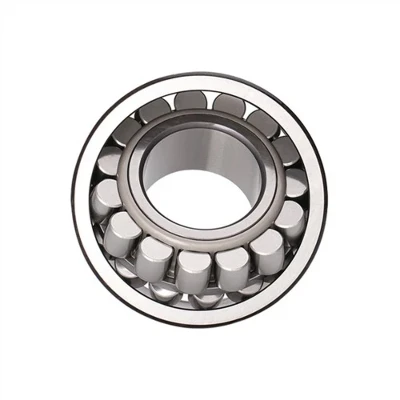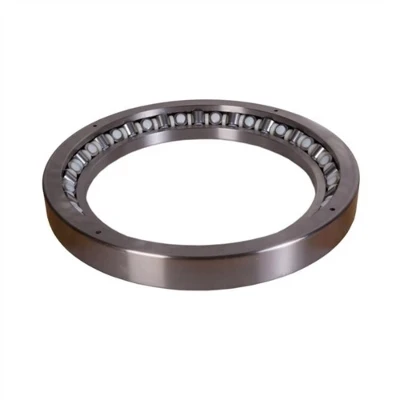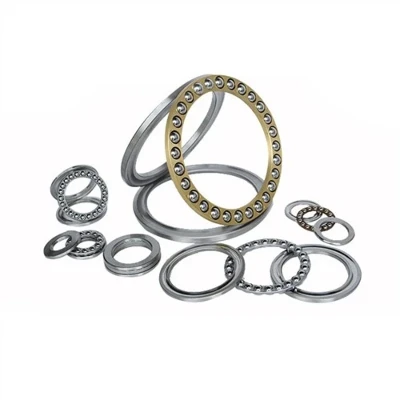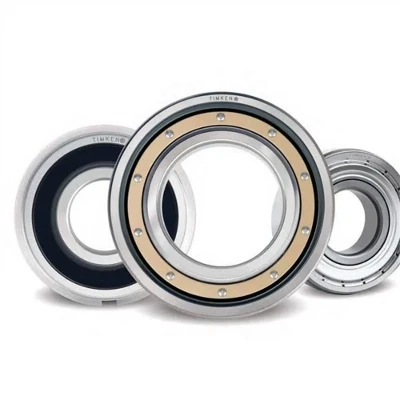



First, the installation surface and installation site requirements
If foreign objects such as iron filings, burrs, dust and other foreign objects enter the SKF bearing, it will cause noise and vibration during operation of the SKF bearing, and even damage the raceways and rolling elements. Therefore, before installing SKF bearings, you must ensure that the mounting surfaces and installation environment are clean.
Second, SKF bearings must be cleaned before installation
SKF bearings are coated with anti-rust oil, which you must carefully clean with clean gasoline or kerosene and then apply clean, high-quality or high-speed, high-temperature grease before installation. The impact of cleanliness on SKF bearing life and noise and vibration is significant. However, we would like to remind you that fully hermetic SKF bearings do not need to be cleaned and refueled.
Third, the choice of grease
Lubrication has a very important impact on the operation and life of SKF bearings, and here is an overview of the general principles of grease selection. Grease is made of base oil, thickener and additives, different types and the same type of different grades of grease performance varies greatly, the allowable rotation limit is different, in the selection must pay attention to the choice. The performance of the grease is mainly determined by the base oil, generally low viscosity base oil is suitable for low temperature, high speed, high viscosity is suitable for high temperature, high load. The thickener is also related to the lubricating performance, and the water resistance of the thickener determines the water resistance of the grease. In principle, greases of different brands cannot be mixed, and even greases of the same thickener will have a bad effect on each other due to different additives.
Fourth, the addition of grease
When lubricating, the more grease is applied, the better, which is a common misconception. Excessive grease in SKF bearings and SKF bearing chambers can cause excessive agitation of grease, resulting in extremely high temperatures. The amount of SKF bearing filling lubricant should fill 1/2~1/3 of the internal space of SKF bearings, and should be reduced to 1/3 at high speed.
Fifth, Installation and dismounting of SKF bearings
Do not directly hammer the SKF bearing end face and non-stressed surface during installation, use briquettes, sleeves or other mounting tools to evenly force SKF bearings, and do not install through rolling elements. If the installation surface is lubricated, it will make the installation smoother. If the interference is large, the SKF bearing should be heated to 80~90 °C in mineral oil and installed as soon as possible, and the oil temperature should be strictly controlled not to exceed 100 °C to prevent the hardness of the tempering effect from reducing and affecting the size recovery. When dismounting is difficult, it is recommended that you use the dismounting tool to pull outward while carefully pouring hot oil on the inner ring, the heat will expand the SKF bearing inner ring, making it easier to fall off.
Sixth, SKF bearing radial clearance selection
Not all SKF bearings require minimal operating clearance, and you must choose the right clearance for the conditions. In the national standard 4604-93, the radial clearance of rolling SKF bearings is divided into five groups - 2 groups, 0 groups, 3 groups, 4 groups, 5 groups, and the clearance values are from small to large, of which 0 groups are standard clearance. The basic radial clearance set is suitable for general operating conditions, normal temperature and commonly used interference fit; SKF bearings working under special conditions such as high temperature, high speed, low noise and low friction should use large radial clearance; For precision spindles, SKF bearings for machine tool spindles, etc., smaller radial clearance should be selected; For rollers, SKF bearings maintain a small amount of operating clearance. In addition, for separate SKF bearings, there is no clearance; Finally, the working clearance of SKF imported bearings after installation is smaller than the original clearance before installation, because SKF bearings are subject to a certain load rotation, and the amount of elastic deformation generated by SKF bearing fit and load.